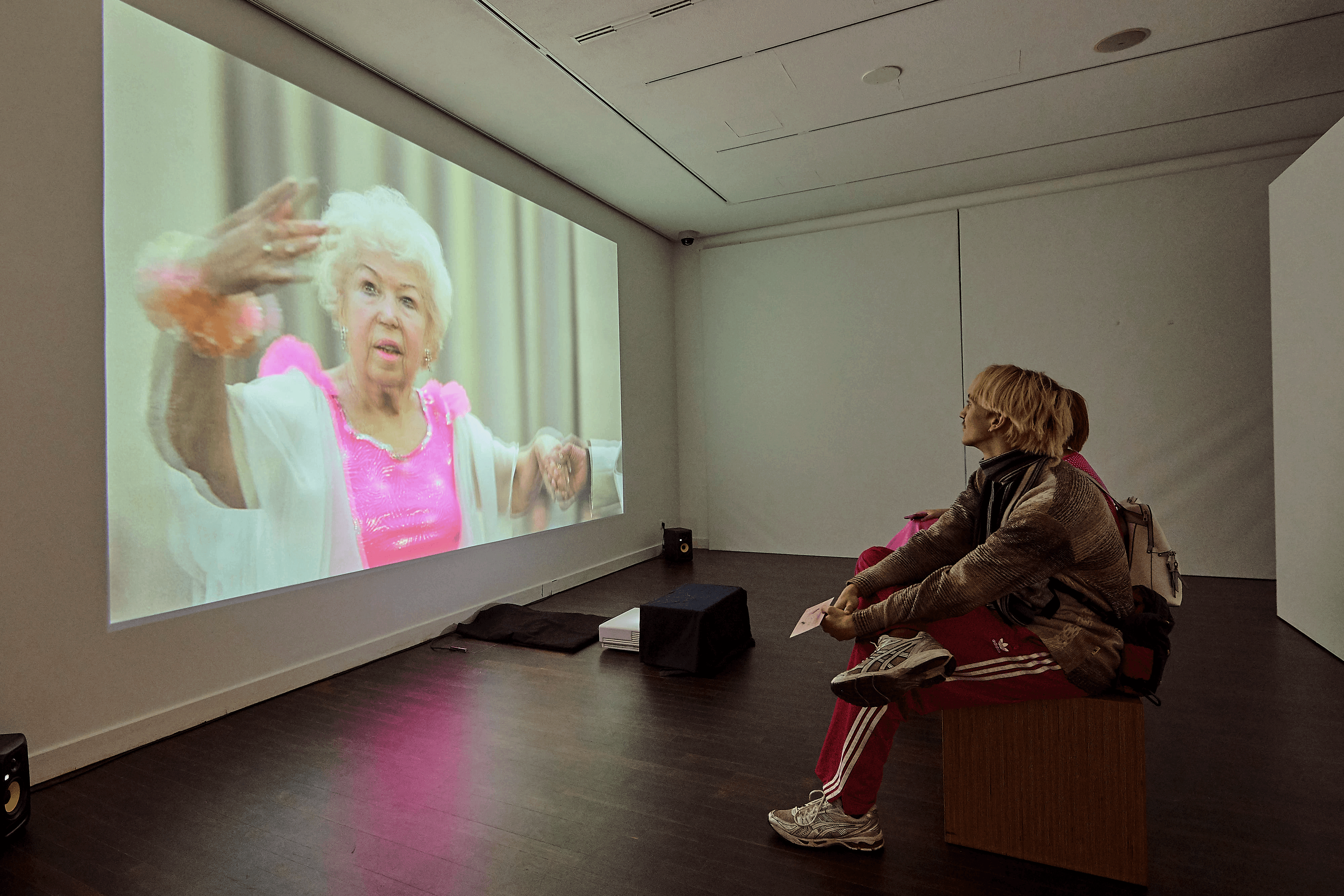
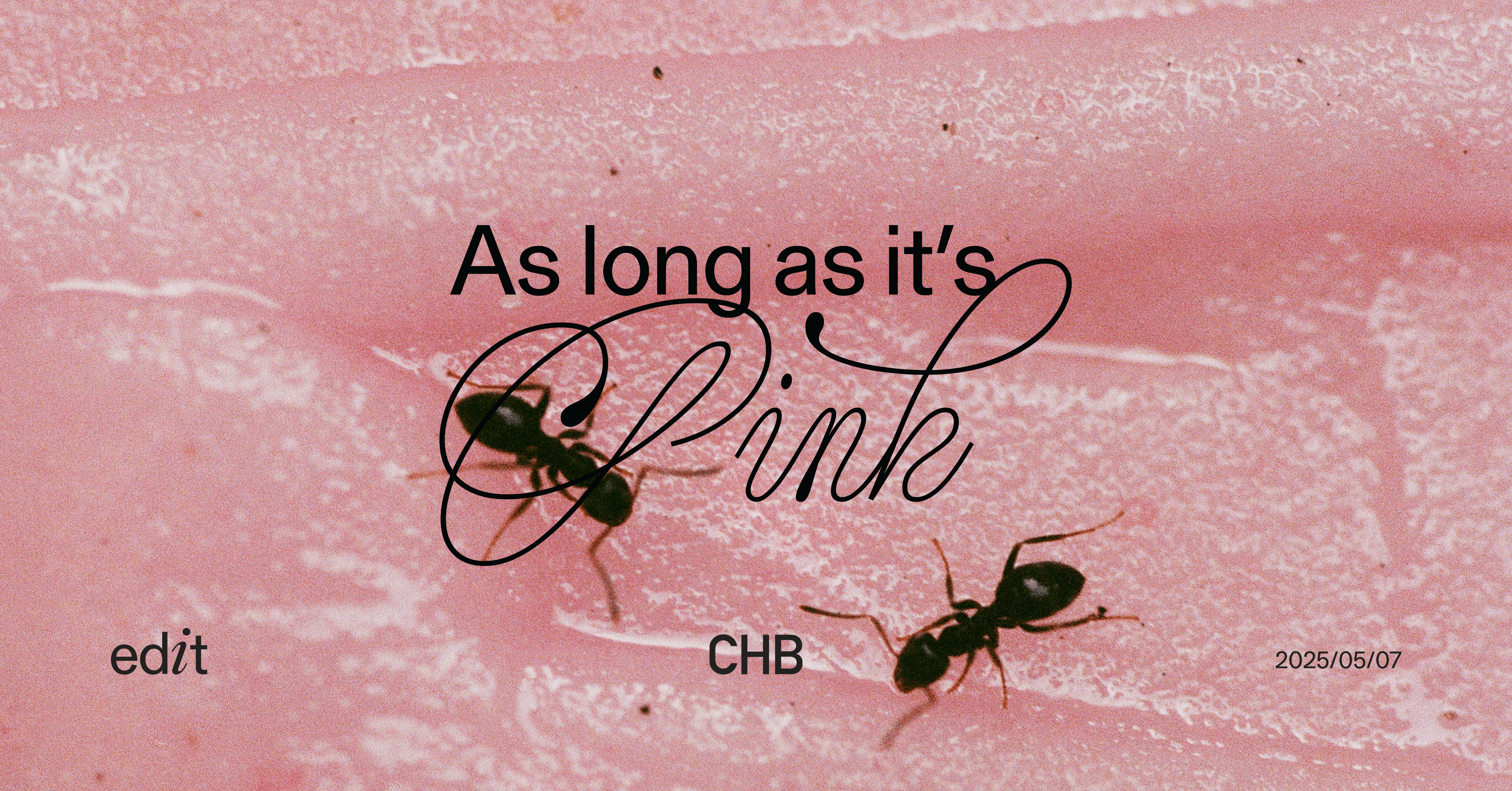
The Berlin edition of the “As long as it’s pink” exhibition explores, through the works of artists and designers from Central and Eastern European countries, how the color pink appears in art and design culture as a signifier of social changes. Building on the previous exhibition opened in Budapest, further research has expanded to include themes such as the interconnections between sweets, gluttony, and nostalgia, as well as the relationship between the color pink and the body—for example, in relation to menstruation and sexual desire.

The Berlin edition of the “As long as it’s pink” exhibition explores, through the works of artists and designers from Central and Eastern European countries, how the color pink appears in art and design culture as a signifier of social changes. Building on the previous exhibition opened in Budapest, further research has expanded to include themes such as the interconnections between sweets, gluttony, and nostalgia, as well as the relationship between the color pink and the body—for example, in relation to menstruation and sexual desire.

AS LONG AS IT'S PINK – BERLIN EDITION
7 May – 12 June 2026, Collegium Hungaricum Berlin, Berlin

EXHIBITING ARTISTS AND DESIGNERS: Dorottya BATÓ (HU), Grzegorz BIBRO (PL), BRAJAK VITBERG (SI), Damian CEHLÁRIK (SK), Lorena COCIONI (RO), Ida-Marie CORELL (AT), Kata OLÁH & Sándor CSUKÁS (HU), Dóra GALYAS DENERAK (HU), Szilárd GÁSPÁR (RO), Hanna GOLLOB (HU), Gizella GÖRGÉNYI (HU), Jácint HALÁSZ (HU), Patrícia HARSÁNY (HU), Nóra KASZANYI (HU), Csaba KLEMENT (HU), Stella KOLESZÁR (HU), Sándor KÖREI (HU), Johanna KÜGERL (HU), Thea LAZĂR (RO), Réka LŐRINCZ (HU), Réka LŐRINCZ (HU), Zita MAJOROS (HU), Luca MARKÓ (HU), Wanda MARTIN (HU), Răzvan NĂSTASE (RO), OLEK (PL), FANNY PÁPAY (HU), Zsófia PAPP (HU), Pavlína POLÁKOVÁ (CZ), Linda PROCHÁZKA (CZ), Marcell PUSKÁS (HU), Fanni PUSZTAI (HU), Rebeka RÁCZ (HU), Hanna RÉDLING (HU), ROKKA collective: Rozina PUSZTAI & Anna FORGÁCH (HU), Lucie ROSICKÁ (CZ), Ioana STANCA (RO), Štěpán ŠUSTER (CZ), Éva SZOMBAT (HU), Patrick TAYLER (HU), Nataša VELIKONJA & Irena WOELLE (SI), Judit ZENGŐVÁRI (HU)
CURATORS: edit (Lilla GOLLOB, Kitti MAYER, Réka VIKÁRIUS, Noémi VISKI)
EXHIBITION COORDINATION: Benedek HRUTKA
EXHIBITION DOCUMENTATION PHOTOS: Balázs CSIZIK, Péter MÁTÉ

CONTRIBUTORS AND PARTNERS: ASUS, Budapest Poster Gallery – Ádám VÁRKONYI (HU), Collegium Hungaricum Berlin, Petra CSIZIK (HU), Deák Erika Gallery (HU), Egy Csepp Figyelem Foundation (HU), Faculty of Architecture, Czech Technical University in Prague (CZ), KLIMCHI (CZ), Křehký (CZ), Leander 1907 (CZ), LIB Women’s Store (HU), Living Documentary (SK), Longtermhandstand (HU), Hungarian National Gallery – Adrienn PRÁGAI (HU), Ani Molnár Gallery (HU), Pigmenta Art Print Lab (HU), PINKPONILO – Anna KUDRON (HU), Printa Budapest (HU), ŠKUC VIZIBILIJA (SI), Bence SZALAY (HU), Szarvasi Household Appliances Ltd. – Krisztina TAKÁCS-STRASSZER (HU), Barnabás WINKLER (HU)

Pink is undoubtedly one of the most stereotype-laden colors, shaped by layers of often contradictory meanings across different historical periods and cultural contexts. Before the 19th century, it was worn by aristocratic men and associated with masculinity. Over time, it became entangled with identities outside the dominant gender, aligned with young girls through the “pink for girls, blue for boys” convention, extended to femininity more broadly, and later recontextualized within queer culture. In recent years, these often stereotypical associations have become increasingly fluid. Pink simultaneously carries both positive and negative connotations, encompassing hyper-feminine and feminist readings alike. It is linked to innocence and sexuality, oppression and liberation, youth and nostalgia, as well as capitalist and socialist legacies.

Pink is undoubtedly one of the most stereotype-laden colors, shaped by layers of often contradictory meanings across different historical periods and cultural contexts. Before the 19th century, it was worn by aristocratic men and associated with masculinity. Over time, it became entangled with identities outside the dominant gender, aligned with young girls through the “pink for girls, blue for boys” convention, extended to femininity more broadly, and later recontextualized within queer culture. In recent years, these often stereotypical associations have become increasingly fluid. Pink simultaneously carries both positive and negative connotations, encompassing hyper-feminine and feminist readings alike. It is linked to innocence and sexuality, oppression and liberation, youth and nostalgia, as well as capitalist and socialist legacies.

As Long as It’s Pink takes its title from Penny Sparke’s 1995 design history publication, which examines stereotypically feminine taste through the lens of material and consumer culture. The book traces how, in the second half of the twentieth century, alongside the growing influence of female consumers, pink emerged within object culture as both an ideological and visual counterpoint to masculine modernist dogma.

The first iteration of the research-based project was realized in the summer of 2025 in Budapest at editory, an independent exhibition space with pink-floor run by the four-member female curatorial collective edit. While the Budapest edition focused on the intersection of global tendencies and Hungarian positions, the Berlin presentation expands this scope to consider how artists and designers engage with pink across the Central and Eastern European region, bringing together perspectives from Slovakia, the Czech Republic, Slovenia, Romania, Austria, and Poland, alongside Hungarian artists working in Berlin.

As Long as It’s Pink takes its title from Penny Sparke’s 1995 design history publication, which examines stereotypically feminine taste through the lens of material and consumer culture. The book traces how, in the second half of the twentieth century, alongside the growing influence of female consumers, pink emerged within object culture as both an ideological and visual counterpoint to masculine modernist dogma.

The first iteration of the research-based project was realized in the summer of 2025 in Budapest at editory, an independent exhibition space with pink-floor run by the four-member female curatorial collective edit. While the Budapest edition focused on the intersection of global tendencies and Hungarian positions, the Berlin presentation expands this scope to consider how artists and designers engage with pink across the Central and Eastern European region, bringing together perspectives from Slovakia, the Czech Republic, Slovenia, Romania, Austria, and Poland, alongside Hungarian artists working in Berlin.

As Long as It’s Pink takes its title from Penny Sparke’s 1995 design history publication, which examines stereotypically feminine taste through the lens of material and consumer culture. The book traces how, in the second half of the twentieth century, alongside the growing influence of female consumers, pink emerged within object culture as both an ideological and visual counterpoint to masculine modernist dogma.

The first iteration of the research-based project was realized in the summer of 2025 in Budapest at editory, an independent exhibition space with pink-floor run by the four-member female curatorial collective edit. While the Budapest edition focused on the intersection of global tendencies and Hungarian positions, the Berlin presentation expands this scope to consider how artists and designers engage with pink across the Central and Eastern European region, bringing together perspectives from Slovakia, the Czech Republic, Slovenia, Romania, Austria, and Poland, alongside Hungarian artists working in Berlin.

Linda PROCHÁZKA (Linda Pro): COQUETTE crystal glass handbag & glass with pink bow, 2024

Linda PROCHÁZKA (Linda Pro): COQUETTE crystal glass handbag & glass with pink bow, 2024

BRAJAK VITBERG: Miami Pink Table Lamp, 2019

BRAJAK VITBERG: Miami Pink Table Lamp, 2019

The heterogeneous selection does not propose a single narrative. Instead, it is constructed from juxtaposed thematic fragments that at times deliberately stand in contrast to, or mirror one another. The world is viewed through rose-tinted lenses, yet not naively, but through a critical design culture perspective in which high art, applied design, and everyday visual culture are interwoven and embedded within the social fabric. Through contemporary artworks, design objects, everyday artifacts, and references to popular culture, multiple layers of pink as a phenomenon become perceptible. The aim is not to fix meaning, but to keep it in motion, allowing the questions pink continues to generate today around the body, identity, and social structures to remain open.

The heterogeneous selection does not propose a single narrative. Instead, it is constructed from juxtaposed thematic fragments that at times deliberately stand in contrast to, or mirror one another. The world is viewed through rose-tinted lenses, yet not naively, but through a critical design culture perspective in which high art, applied design, and everyday visual culture are interwoven and embedded within the social fabric. Through contemporary artworks, design objects, everyday artifacts, and references to popular culture, multiple layers of pink as a phenomenon become perceptible. The aim is not to fix meaning, but to keep it in motion, allowing the questions pink continues to generate today around the body, identity, and social structures to remain open.

The heterogeneous selection does not propose a single narrative. Instead, it is constructed from juxtaposed thematic fragments that at times deliberately stand in contrast to, or mirror one another. The world is viewed through rose-tinted lenses, yet not naively, but through a critical design culture perspective in which high art, applied design, and everyday visual culture are interwoven and embedded within the social fabric. Through contemporary artworks, design objects, everyday artifacts, and references to popular culture, multiple layers of pink as a phenomenon become perceptible. The aim is not to fix meaning, but to keep it in motion, allowing the questions pink continues to generate today around the body, identity, and social structures to remain open.